
Table of Contents
ToggleNatural Grass vs Artificial Grass: Which One Is Best for Dubai Landscaping? (2026 Guide)
-
 Laura Bathia
- May 20, 2026
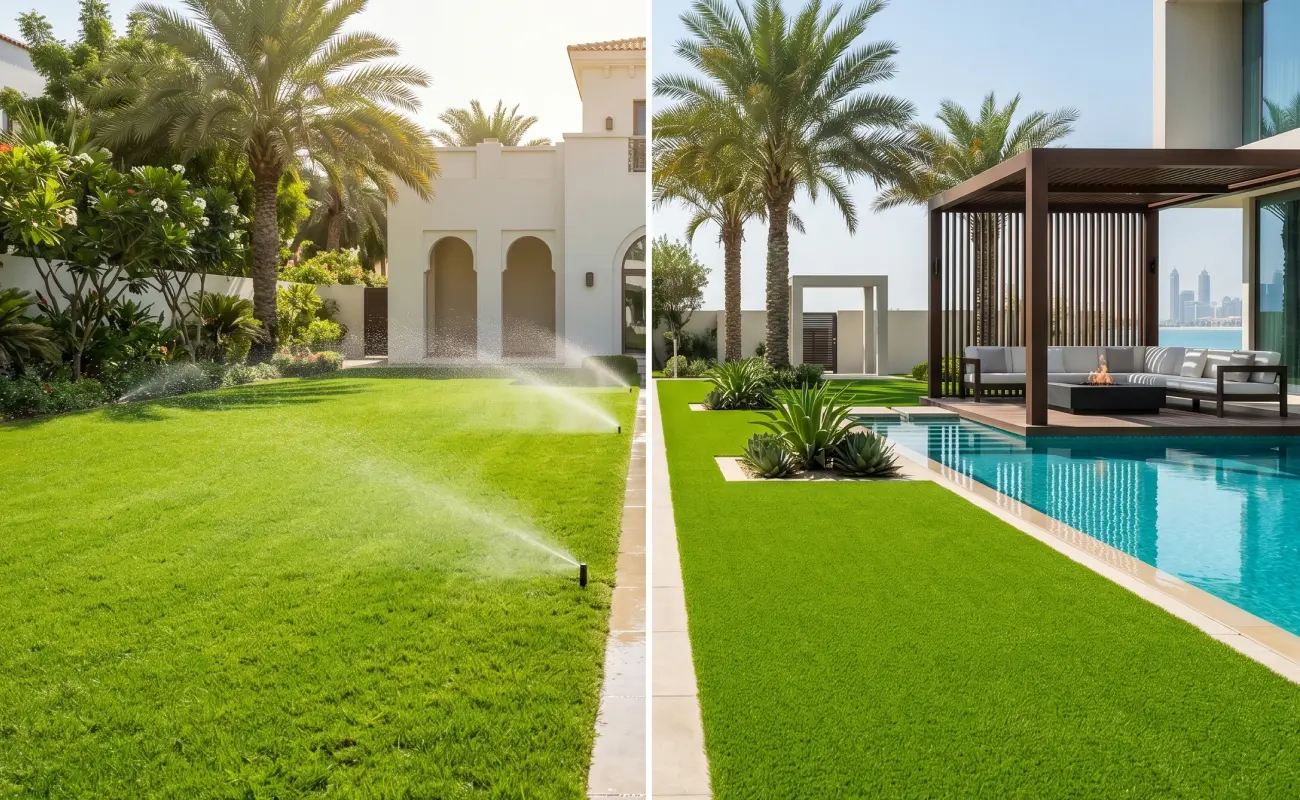
Quick Answer: For most Dubai villa owners, premium artificial grass is the more practical long-term choice. Water costs, sustained summer heat, and the genuine maintenance commitment natural grass demands make synthetic turf the sensible pick for most homes here. Natural grass still works, but only for owners who go in knowing exactly what it involves. This guide gives you both sides with real numbers so you can decide based on your actual situation whether you are comparing artificial grass vs natural grass, natural lawn vs artificial lawn, or trying to understand natural grass vs artificial grass for landscaping in real UAE conditions.
Table of Contents
ToggleWhy Choosing the Right Grass Matters
Get this wrong, and you'll know within three months.
Either you're spending every weekend maintaining a lawn that's fighting a losing battle against the UAE heat, watching patches appear, irrigation bills climb, and the grass thin out through July and August, no matter what you do. Or you've installed artificial grass that gets dangerously hot in direct summer sun, or looks so obviously synthetic it makes the whole property feel cheaper than it did before.
Dubai and Abu Dhabi are unforgiving on this decision in ways that milder climates simply aren't. Natural grass that thrives in Europe struggles here. Cheap artificial grass that looks fine in a showroom breaks down fast under 45°C+ sun and leaves you reinstalling within three years.
Natural Grass vs Artificial Grass: Quick Comparison
Understanding where each option genuinely outperforms the other on cost, maintenance, heat performance, durability, and sustainability is what allows a well-informed decision to be made before any installation begins. The table below provides a direct side-by-side comparison across every factor that matters in a UAE context. For most homeowners, this is the point where the conversation shifts from appearance alone to long-term practicality, especially when comparing artificial grass vs natural grass in terms of cost, upkeep, and durability.
| Factor | Natural Grass | Artificial Grass |
|---|---|---|
| Installation Cost | Approx. AED 10–15 per sq. ft | Approx. AED 20–50 per sq. ft |
| Annual Maintenance Cost | Approx. AED 3,000–4,000 (medium villa) | Approx. AED 500–1,500 |
| Water Usage | High — daily irrigation required | Zero |
| Lifespan | Ongoing but needs patching every year | 5–7 years with premium quality |
| Weekly Time Commitment | 2–3 hours | 10–15 minutes |
| Surface Temp in Dubai Summer | Approx. 30–35°C | Approx. 45–70°C depending on quality |
| Appearance | Fully authentic | Realistic if premium grade |
| Kids and Pets | Soft, wears in high-traffic spots | Durable, handles heavy use |
| Drainage | Good with proper soil preparation | Excellent when professionally installed |
| Best For | Authentic feel, committed maintenance | Low effort, long-term value |
Natural Grass: What It Is, Pros and Cons
What is Natural Grass in a UAE Context?
Natural grass is a living plant system. It needs water, sunlight, soil nutrition, and consistent care to survive, and in Dubai's climate, the bar for "consistent" is higher than most people expect going in.
The varieties that hold up best here are Bermuda grass and Paspalum, both warm-season grasses developed for heat tolerance. Even so, both show genuine stress when temperatures stay above 42°C for extended weeks, which is a regular reality from June through September. UAE soil compounds the challenge, mostly compacted sand with minimal organic content, which means proper soil preparation before installation isn't optional. Without it, grass either fails to establish or develops patchy areas within the first growing season.
1. Pros of Natural Grass: It looks and feels completely authentic. Colour variation between blades, the way it moves in a breeze, the texture, barefoot, no synthetic product fully replicates any of this yet. For homeowners who spend real time in their gardens, this difference is felt daily.
2. It cools the air around it: Natural grass releases moisture through evapotranspiration, actively lowering the surrounding air temperature. Research consistently shows natural grass surface temperatures running approximately 30–35°C on a 40°C day, compared to 50–70°C for unshaded artificial turf. For families using outdoor space throughout the day, that's a meaningful usability difference.
3. Lower installation cost. At approx. AED 10–15 per sq. ft, natural grass installs at roughly half to a third the cost of quality artificial turf. For shorter-term stays or tighter initial budgets, this matters.
4. Damaged areas recover. Patches regrow with water and care over time. That's not possible with synthetic turf; worn seams and damaged sections need replacement, not recovery.
5. Environmental benefits are real. Oxygen production, CO2 absorption, support for soil biology, and local insect life, natural indoor plants are a living system contributing to its surroundings.
7. Weekly maintenance never stops: That ongoing commitment is where both natural grass maintenance and the wider natural grass maintenance costs start becoming much more serious than most homeowners expect at the beginning. Mowing, fertilizing, edging, pest inspection, and seasonal aeration during the growing season, which runs to 2–3 hours every week. If you're outsourcing it, budget approximately AED 200–400 monthly for a professional service to cover it properly.
8. High traffic areas deteriorate fast: A dog's regular corner, children running the same route daily, and a fixed outdoor seating position all create worn or dead patches within months of consistent use.
9. UAE summer stress is real: Even the most heat-tolerant varieties show seasonal yellowing and thin coverage during June through September, even with committed care and proper irrigation. Natural grass is always fighting UAE conditions, not thriving in them.
Artificial Grass: What It Is, Pros and Cons
What Should You Look for in Artificial Grass for the UAE Climate?
Not all artificial grass is built for Dubai. The quality gap between a budget product and a premium one is larger here than anywhere with a milder climate, and buying the wrong product is one of the most common and costly mistakes villa owners make.
Modern premium artificial grass uses polyethylene or polypropylene fibres. This is also why more villa owners are now looking at Artificial lawn solutions instead of traditional turf, especially in spaces where water use and long-term upkeep are becoming bigger concerns. in multiple shades of green and brown for visual depth, a perforated backing for drainage at 30–50+ litres per hour per square metre, and infill material, silica sand, rubber, or specialty cooling compounds between the blades. A thatch layer adds the depth and texture that makes premium turf look genuine from a distance.
The features that matter specifically for UAE conditions:
UV stabilisation built into the fibre is non-negotiable. Without it, Dubai's sun exposure degrades plastic within 2–3 years. Always ask for a minimum 7–10 year UV warranty and verify it covers outdoor UAE use.
Cooling infill makes a real difference. Standard rubber infill holds heat dangerously in the Dubai summer. Research from AstroTurf found zeolite infill reduces surface temperatures by up to 22°C compared to untreated turf.
Installation quality determines long-term performance as much as the product itself. That is exactly why professional turf installation matters so much in the UAE, especially when homeowners are comparing premium products against cheaper options that often fail early. A proper crushed stone sub-base, compacted sand layer, and correctly graded surface determine drainage and how long the turf stays looking good. Poor installation of good turf still produces a poor result.
Pros of Artificial Grass
1. Zero water after installation: Over 10 years for a 300 sq. m villa lawn, that's more than 650,000 litres saved and roughly AED 60,000–80,000 kept out of your DEWA bill. In a region where water scarcity is a documented national concern, this isn't a minor benefit.
2. Maintenance is genuinely minimal: Compared to real turf, artificial grass maintenance is lighter, more predictable, and much easier to manage across villas, terraces, and poolside spaces. Monthly brushing in high-traffic areas, an occasional hose-down after sandstorms. Total annual time sits around 15–20 hours compared to 100+ hours for natural grass.
3. Consistent appearance year-round: No stress periods, no seasonal browning, no recovery cycles to manage. What it looks like in November is what it looks like in July.
4. Handles heavy use well: Quality synthetic turf is engineered for sports fields and commercial spaces with far heavier foot traffic than any villa garden. Kids, dogs, regular outdoor entertaining, a properly installed premium lawn handles all of it without wearing the way natural grass does.
5. Long lifespan when quality is right: Premium artificial grass with UV stabilisation realistically lasts 10–15 years. Over that period, the higher upfront cost spreads out considerably.
6. Works anywhere natural grass can't: Balconies, rooftops, areas with compacted or saline soil, spots without adequate sun or drainage, and artificial grass can go where real turf simply cannot establish.
Cons of Artificial Grass
Heat in the direct Dubai summer sun is a genuine concern. Budget products handle this very badly.
2. It's plastic: Manufacturing uses petroleum-based materials, and the product doesn't biodegrade at the end of life. The environmental picture against natural grass is more nuanced than water savings alone suggest.
3. The feel isn't identical to real grass: Even the best premium products don't replicate the exact sensation of natural grass underfoot. Very close, but for homeowners who value that specific texture, it remains a compromise regardless of quality.
Cost Comparison: Natural Grass vs Artificial Grass
Natural Grass — 5-Year Total Cost
| Cost Item | Amount |
|---|---|
| Installation (sod or seed, soil prep included) | Approx. AED 32,000–48,000 |
| Annual water — DEWA, daily irrigation | Approx. AED 6,000–8,000 per year |
| Annual maintenance (mowing, fertiliser, pest control) | Approx. AED 3,000–5,000 per year |
| Year 1 Total | Approx. AED 41,000–61,000 |
| 5-Year Total | Approx. AED 77,000–113,000 |
Artificial Grass — Mid-Range Premium, 5-Year Total Cost
For homeowners considering Artificial grass installation in Dubai & Abu Dhabi, the upfront cost is usually higher, but the long-term numbers are often easier to manage once irrigation and ongoing lawn care are taken into account.
| Cost Item | Amount |
|---|---|
| Installation (supply, base prep, infill, labour) | Approx. AED 96,000–128,000 |
| Annual maintenance (brushing, hosing, occasional top-up) | Approx. AED 500–1,000 per year |
| Year 1 Total | Approx. AED 96,500–129,000 |
| 5-Year Total | Approx. AED 98,500–133,000 |
Break-even on a typical Dubai villa lawn sits between year five and year seven. After that point, artificial grass is clearly cheaper in total. Before it, natural grass costs less overall.
Two things worth flagging. First, cheap artificial grass at approx. AED 15–20 per sq. ft won’t survive five UAE summers — so the maths shift significantly if you cut corners on the product. Second, the natural grass figures above don’t include your personal time. Natural grass requires over 100 hours of maintenance annually. If you’re outsourcing that, add roughly AED 200–400 per month in professional service fees.
Ready to work out which grass suits your specific space?
Golden Seed provides honest site assessments and detailed recommendations across Dubai, Abu Dhabi, Sharjah, Ajman, Fujairah, and Ras Al Khaimah. We’ll tell you what actually makes sense for your project and give you a detailed, itemised quotation before anything is committed.”
How Much Maintenance Does Natural Grass Actually Need?
Natural grass needs consistent weekly attention throughout the year, every year, and the UAE climate makes that bar higher than most places.
How Much Maintenance Does Artificial Grass Actually Need?
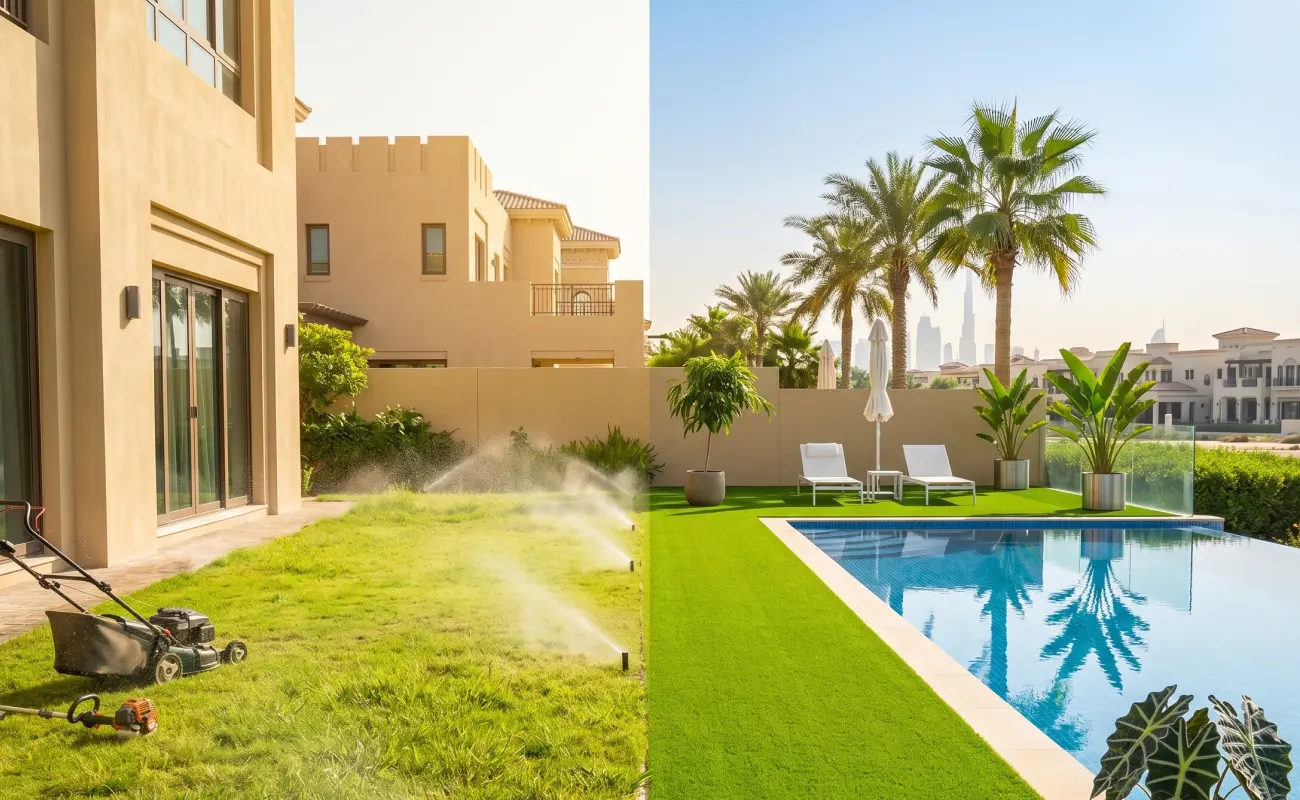
Artificial grass needs occasional attention once a month. That’s the honest answer.
Weekly: Brush high-traffic areas with a stiff broom to keep fibres upright. Around 10 minutes.
1. Every two weeks: Hose down to clear dust and debris more important after sandstorms, which leave visible deposits on any outdoor surface in Dubai.
2. Monthly: Check edges and seams, press down any lifting sections, and check infill levels.
3. Quarterly, if pets use the space: Deep clean with an enzyme-based cleaner and thorough rinse to manage odour.
4. Annually: Optional professional inspection for UV degradation, compacted infill, and seam integrity.
5. Running total: approximately 15–20 hours annually.
Water Usage and Sustainability Comparison
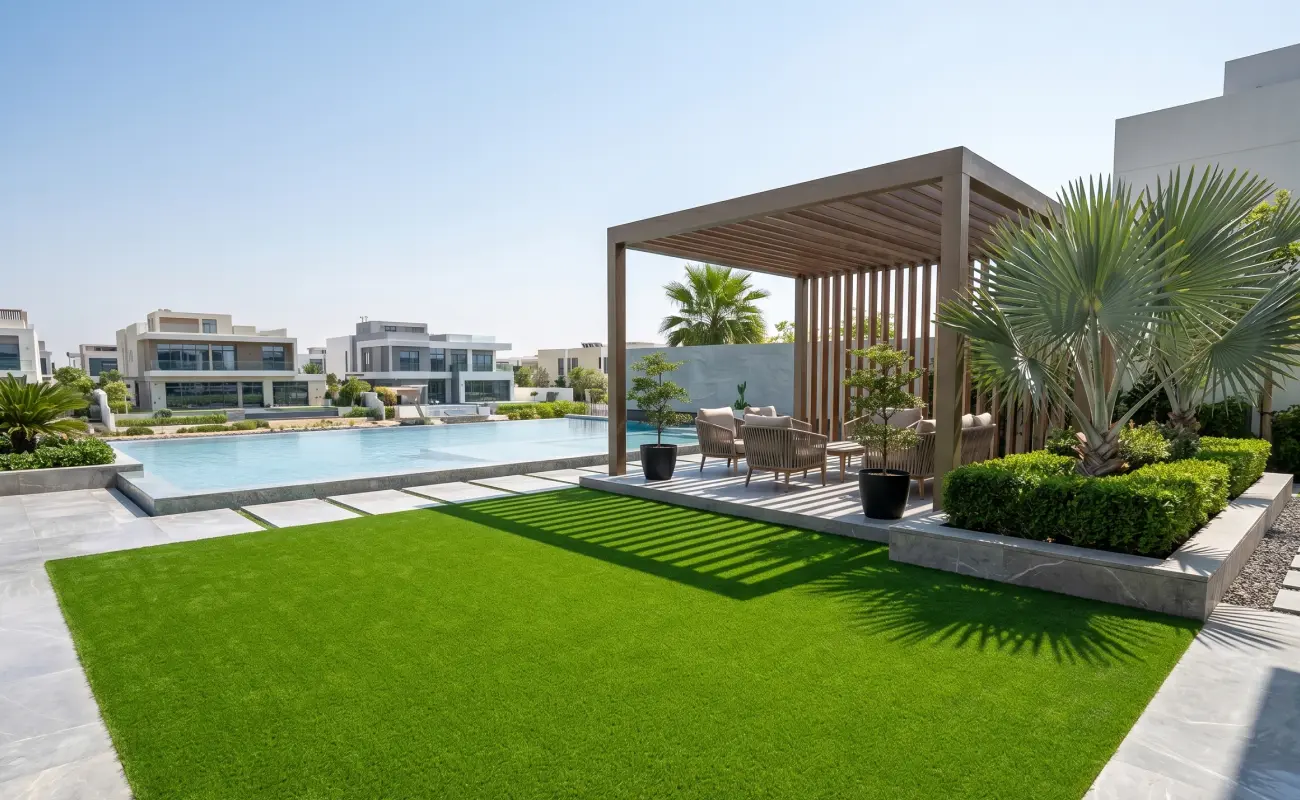
Artificial grass saves significantly more water, and in the UAE, that matters more than anywhere else.
Natural grass in Dubai’s summer requires approximately 6–8 litres per square metre daily to stay genuinely healthy, according to UAE horticultural guidance. For a 300 sq. m villa lawn that’s 1,800–2,400 litres every single day. Over a full summer month: 54,000–72,000 litres. Annually: well above 650,000 litres for one medium-sized lawn. Based on DEWA consumption rates, this translates to approximately AED 6,000–10,000 per year in water charges just to keep the grass alive.
Artificial grass uses zero irrigation water. Over 10 years, a single 300 sq. m installation saves more than 6.5 million litres. The UAE has one of the highest per-capita water consumption rates globally, and freshwater scarcity is a documented national priority. That saving is real and meaningful, not just a marketing point.
The sustainability picture isn’t entirely one-sided, though. Artificial grass is petroleum-based plastic manufacturing, which carries emissions and the product doesn’t biodegrade at the end of life. Natural grass by contrast, produces oxygen, absorbs CO2, supports soil biology, and contributes to localised air cooling. For the UAE specifically, water scarcity tips the environmental balance toward artificial grass for most residential applications. But it’s a genuine trade-off across sustainability measures, not a clean win on every count.
8. Heat, Drainage, and Weather Performance in the UAE Climate
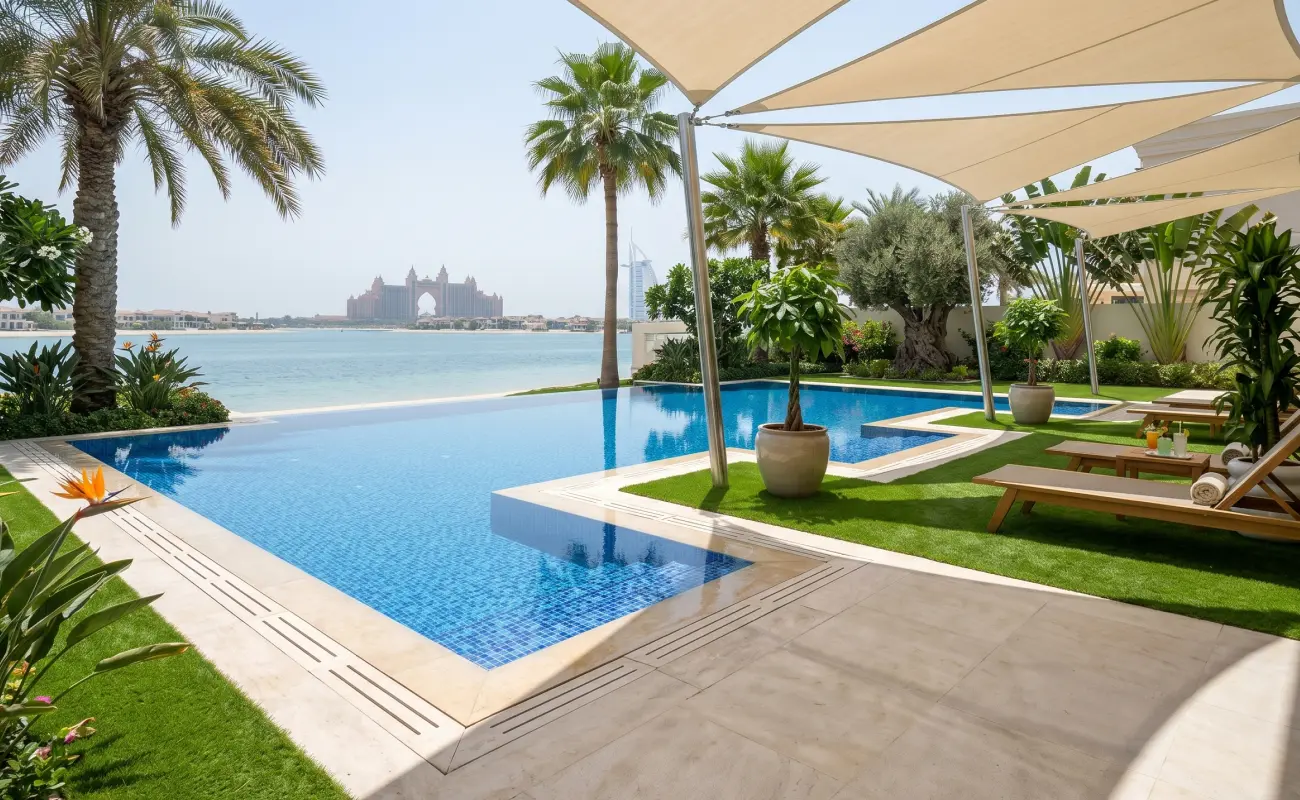
Is Artificial Grass Too Hot to Use in Dubai Summer?
Yes, if the product is budget grade and installed without shade. This is the question suppliers often dodge and it deserves a straight answer.
Research published in Building and Environment found artificial turf surface temperatures reaching up to 71.6°C under summer conditions. A separate study on conventional rubber-infilled turf recorded peaks of 67.7°C. In Dubai’s ambient temperatures, which regularly hit 46°C or above from June through August, budget artificial grass in direct full sun is genuinely unsafe for barefoot contact.
Premium artificial grass with quality cooling infill performs meaningfully better. Research from AstroTurf studies found zeolite infill reduces surface temperatures by up to 22°C compared to untreated turf. Independent tests on cooling infill compounds show reductions of 15–28°C versus standard rubber infill. In practice, premium cooled turf in Dubai full summer sun sits around 45–55°C warm, but no longer dangerous.
Shade is what actually makes artificial grass usable in Dubai’s summer, regardless of infill quality. Turf installed under a pergola, shade sail, or in naturally shaded areas stays dramatically cooler. Most Golden Seed clients who choose artificial grass also incorporate shade structures over main activity zones. The combination works consistently well.
Natural grass runs approximately 30–35°C on the same 40°C day through evapotranspiration. If full barefoot usability at midday in August is a genuine priority, natural grass holds a real advantage here, provided it’s being maintained properly through summer.
Which Grass Drains Better in Dubai?
Properly installed artificial grass drains better than natural grass in most Dubai conditions.
Natural grass drainage depends entirely on soil preparation and slope. UAE soil, typically compacted sand with minimal organic content, either sheds water too fast (wasting irrigation) or pools in low spots after heavy rain, creating mud and dead patches. Fixing poor drainage after installation means regrading or serious soil amendment not cheap or simple.
Appearance and Feel: Which Looks More Premium?
Natural grass looks more premium when it’s properly maintained. Artificial grass looks more premium when natural grass isn’t.
Natural grass is authentic because it is authentic. Colour variation between individual blades, the way a well-watered lawn moves in a breeze, the visual quality at golden hour, none of this is manufactured. But keeping that premium look in UAE conditions takes real commitment. Natural grass here often looks stressed, with yellow patches, thin spots, and uneven growth. The lush green lawn requires constant effort and frequently doesn’t survive the summer looking its best, regardless.
Artificial grass appearance is entirely product-dependent. Budget turf looks fake from day one, single-shade green, plastic sheen, fibres that mat down within months. Premium artificial grass is a different product entirely. Multiple shades of green and brown, a thatch layer for depth, soft fibres that spring back after use, UV protection that prevents fading, professionally installed, quality turf is genuinely hard to distinguish from several metres away.
Feel is where artificial grass still compromises. Even the best premium products don’t replicate the exact sensation of natural grass underfoot. For adults who value the authentic barefoot-on-grass texture, this gap is real. For children playing and for most day-to-day outdoor use, the difference is rarely noticed.
Safety for Kids and Pets
Both options are safe. The risks are different, not comparable in severity.
Natural Grass Safety
Natural grass is soft underfoot, and falls on it are forgiving. No heat concerns in shaded areas. Feels good barefoot in cooler months.
The practical concerns: pest activity is common in UAE lawns, ants, fleas, and grubs depending on season and location. Chemical treatments, including pesticides and fertilisers are necessary for maintenance and aren’t completely inert even when labelled safe. High-use areas become compacted dirt patches, which turn to mud when wet. Dogs urinating repeatedly in one spot create dead zones from nitrogen concentration.
Artificial Grass Safety
Artificial grass handles heavy play without wearing out, needs no chemical treatments, and never turns to mud. For pets specifically, the perforated backing drains urine efficiently, solid waste is easy to remove and rinse, and enzyme-based cleaners manage any odour effectively. These are real practical advantages for households with dogs, which is why a significant number of Dubai villa owners with pets choose artificial grass specifically.
Heat in direct peak summer sun is the main safety concern. Unshaded artificial grass gets too hot for barefoot play during midday hours from June through August. The practical solution: plan shade structures over main activity zones. Morning and evening use on unshaded surfaces is comfortable; midday use requires shade. This is a planning consideration, not a reason to avoid artificial grass.
Best Option for Different Landscaping Areas
How to Choose the Best Grass for Your Landscaping Project
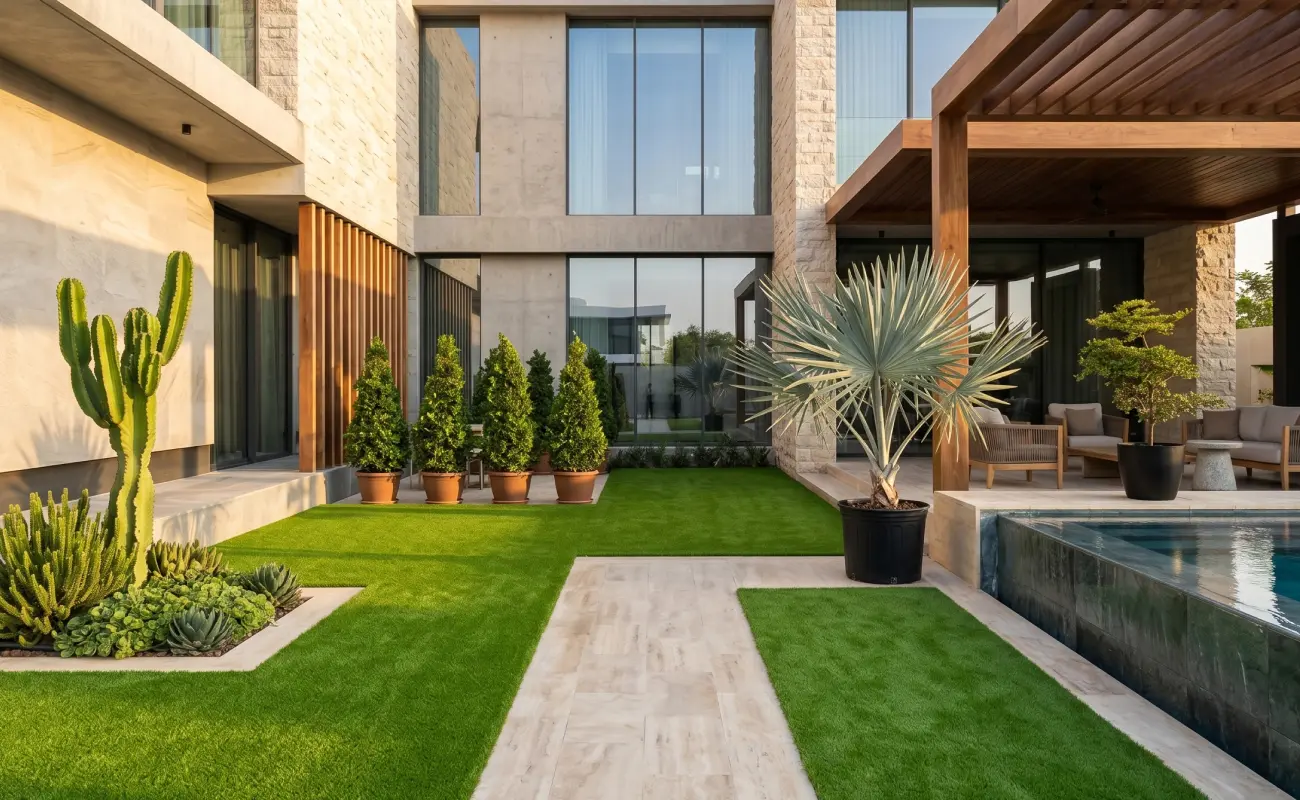
Five questions that actually determine the right answer for your specific situation:
What is your actual budget ceiling? Comfortable absorbing a higher upfront cost in exchange for lower long-term running costs? Artificial grass makes financial sense. Need lower initial spend regardless of the long-term total? Natural grass installs cheaper and costs less for the first few years.
How much time can you honestly commit to maintenance? This matters more than most people admit to themselves before committing. If the real answer is minimal time or minimal interest in weekly garden work, natural grass will deteriorate within a year, regardless of how well it was installed. Artificial grass is the only genuinely low-maintenance option.
How do you actually use the space? Heavy daily traffic, kids, dogs, regular outdoor entertaining? Artificial grass holds up better under sustained use. Mostly aesthetic, lightly used, more looked at than walked on? Natural grass feels and looks more premium for this kind of space.
What does your sun exposure look like? Full sun all day in summer? Invest in premium artificial grass with quality cooling infill and plan shade structures over main activity zones before installation, not after. Partial shade or naturally covered areas? Either option performs well.
How long are you planning to stay?
Ten or more years of ownership? Artificial grass is more cost-effective over the long term by a meaningful margin. A 2–3 year stay? Natural grass costs less in total over that shorter period.
Expert Recommendation: Which One Should You Choose?
After years of installing and maintaining grass across Dubai villa communities from Arabian Ranches to Palm Jumeirah, Emirates Hills to Jumeirah Golf Estates, Al Barsha to Mirdif, this is the honest position.
For most UAE villa owners, artificial grass is the more practical answer. Water savings alone make a compelling case in this climate. Add the reduction in ongoing maintenance and the long-term cost comparison, and it becomes difficult to argue for natural grass as a default choice for most use cases here.
What Golden Seed’s own project data shows: roughly 70–75% of Dubai villa clients who consult us end up choosing artificial grass. Of those who choose natural grass, the ones who are happiest a year later are the ones who either have a weekly maintenance service already in place or genuinely enjoy hands-on lawn care. The ones who struggle are those who chose natural grass, expecting it to be more manageable than it actually is in this climate.
Product quality is the variable that determines whether artificial grass delivers or disappoints. Premium artificial turf at approx. AED 30–40+ per sq. ft lasts, looks genuinely realistic, and handles UAE heat properly with the right infill and shade planning. Budget turf at approx. AED 15–20 per sq. ft degrades within a few years, looks obviously synthetic from installation day, and costs more in the long run when early replacement is factored in.
For balconies, rooftop terraces, pool surrounds, and commercial properties, artificial grass is the practical choice across the board. For villa gardens, the majority of our clients choose artificial. A portion still chooses natural. Both produce good results when installed properly and maintained regularly.
We recommend what suits your specific project, not what’s faster to install or easier to sell. If the brief calls for low-maintenance greenery, long-term consistency, and a realistic installation approach, working with the Best Artificial Grass Installation Service in Dubai matters just as much as choosing the turf itself.
FAQs
Natural grass costs less to install at approx. AED 10–15 per sq. ft, compared to approx. AED 20–50 per sq. ft for artificial. However, annual DEWA water costs and ongoing maintenance make natural grass significantly more expensive over time. For a medium Dubai villa lawn, break-even typically falls between years five and seven. After that, artificial grass is consistently cheaper in total spend.
Premium artificial turf with proper UV stabilisation and professional installation typically lasts 10–15 years in UAE conditions. Budget artificial grass without adequate UV protection deteriorates within 3–5 years under Dubai’s sun intensity. Always request a minimum 7–10 year UV warranty and verify it covers outdoor UAE conditions specifically.
Research published in Building and Environment found artificial turf surface temperatures reaching up to 71.6°C under summer conditions. Budget turf in direct Dubai sun is unsafe for barefoot contact. Premium artificial grass with quality cooling infill performs 15–22°C cooler than standard rubber-infilled turf, bringing surface temperatures down to approximately 45–55°C in full sun. Shade reduces this significantly. Turf under a pergola or shade sail stays comfortable even in peak summer.
Yes, when installed with appropriate infill and a shock-absorbing underlay. The main concern is surface heat during peak summer, ensuring shaded play zones for midday use. For pets, perforated backing drains efficiently, and enzyme-based cleaners manage any odour effectively.
For most Dubai villa gardens, premium artificial grass offers better long-term value: lower maintenance demands, significant water savings, and consistent appearance year-round. Natural grass is the better fit for homeowners who actively want to maintain a lawn and value the authentic feel and natural cooling it provides. The right answer depends on usage and the level of ongoing commitment the owner is genuinely willing to make.
In most buildings, yes. Some buildings require approval for shared or rooftop spaces, so checking with building management before installation is worthwhile. Natural grass is not a practical option for balconies due to weight load, soil depth requirements, and drainage constraints.
Professional artificial grass installation in Dubai typically ranges from approx AED 20–50 per sq. ft, depending on turf quality, site preparation required, and total area. Mid-range premium turf suitable for villa gardens generally falls in the approx. AED 30–40 per sq. ft range. Always request an itemised quotation separating turf supply, base preparation, infill, and labour. A lump-sum figure without line-item detail is a red flag.
Quality artificial grass doesn’t smell on its own. Pet urine can cause odour if not cleaned regularly, but enzyme-based cleaners resolve this effectively. Poor drainage or organic debris trapped in fibres can create a smell with any turf type. A professional installation that ensures proper drainage prevents this from being an issue.