


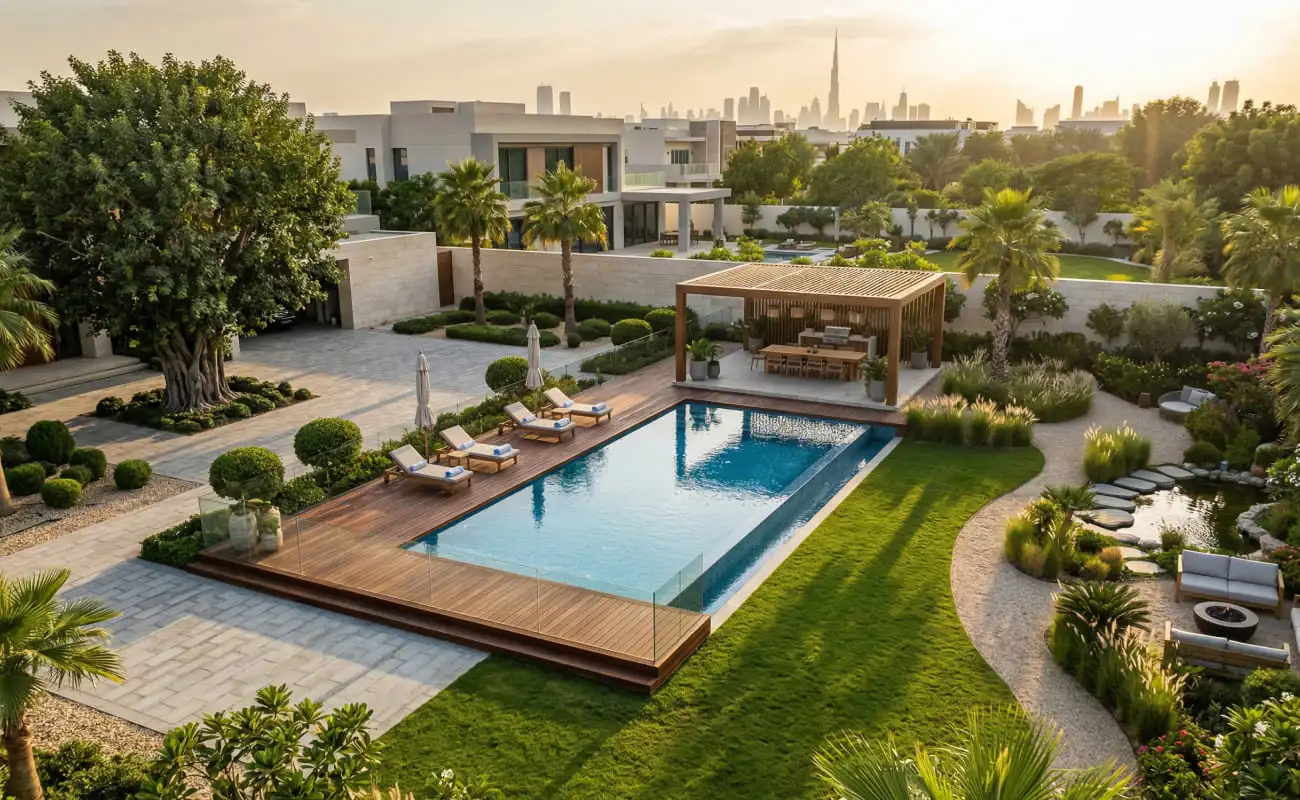
Walk through any premium neighbourhood in Dubai, and you'll notice something odd. The homes are extraordinary. The finishes, the architecture, the interiors, all of it considered and carefully executed. Then you look at the garden and wonder if it belongs to the same property. Dead patches where the grass gave up. A boundary wall with three mismatched plants drooping in front of it. A terrace that cost a fortune to tile and hasn't been sat on properly in months because nobody thought about shade when it mattered.
Honestly, it's more common than you'd think. And it's not because people don't care about their gardens. It's because the garden always gets left to the end. There's always something more urgent. Then the villa is finished, the budget has taken a hit, and the outdoor space becomes whatever can be sorted quickly before the family moves in.
That approach almost always ends the same way.
Good landscape design isn't about sorting it quickly. It's about building something that works for the climate, for the way you actually live, and for the long term. A garden that looks genuinely better in year three than it did on day one, rather than one that's quietly falling apart by the second summer.
These landscape design tips for Dubai homes aren't lifted from a generic gardening blog written for someone in Manchester. Everything here is specific to this soil, this heat, and these communities. Whether you've got a villa plot in Al Barari, a townhouse in DAMAC Hills, or a balcony in Business Bay, there's something here worth reading before you spend a single dirham on your outdoor space.
Start With a Plan, Not a Plant
Nobody wants to hear this part. Everyone wants to skip straight to the exciting bit, choosing plants, picking materials, imagining what the finished space will look like. Completely understandable. Also completely the wrong place to start.
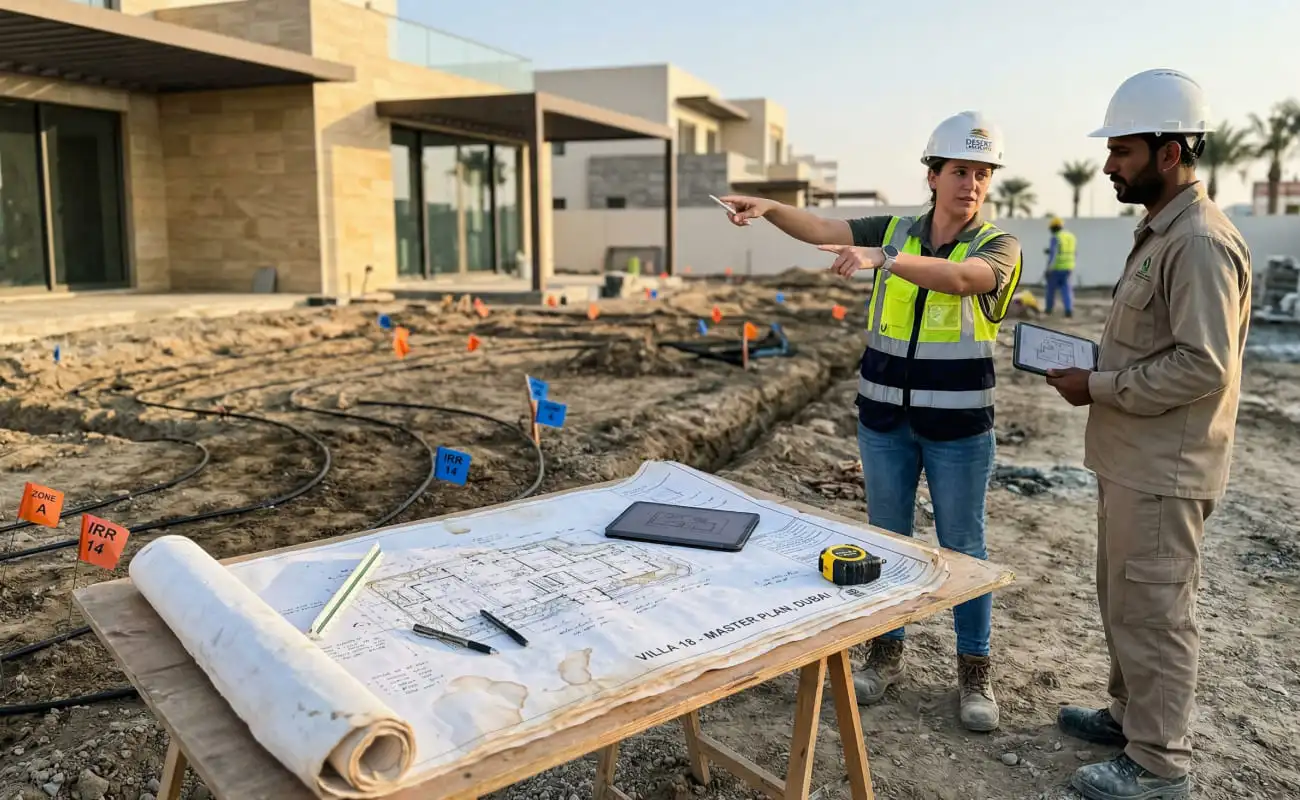
Skipping the planning phase is the most expensive mistake in garden landscaping, and it's not even close. Here's what actually happens. Someone visits a nursery, falls in love with a row of palms, buys them on the spot and figures the layout will sort itself out later. It doesn't. The palms go in the wrong spots. They block the only natural shade. The irrigation gets designed around what's already in the ground rather than what the garden actually needs. Twelve months later, two of those palms are struggling because nobody checked the drainage or the soil conditions before planting.
A proper plan costs a fraction of what fixing a bad one costs.
Garden layout ideas that still work five years later are always specific to the site. A villa entrance facing west needs a completely different treatment from one facing north. A backyard shaded by the house in summer has different planting opportunities from one that bakes year-round without relief. The details only come out through proper assessment, and no amount of looking at beautiful Instagram gardens substitutes for that.
There's a financial argument too, and it's a strong one. With 2D design visualisation, you see the finished garden before a single dirham is spent on installation. You can shift the pergola, swap a paving material, and rethink the pool surround, all at design cost rather than construction cost. Changing your mind on screen is free. Changing it after the stone is laid is not.
Design for Dubai's Climate First, Aesthetics Second
This is the section most people skim. Don't.
A garden designed primarily around aesthetics without deeply understanding these conditions will look incredible in November. By June, it'll be in trouble. This isn't a worst-case scenario. It's just what happens when the climate doesn't get the respect it deserves at the design stage.
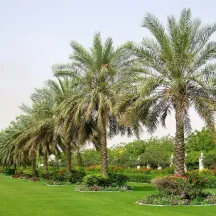
Landscape design tips for Dubai homes that actually survive start with honest plant selection. Every species needs a proven Gulf track record, not just a nice image in a catalogue. Bougainvillea, Date Palms, Washingtonia Palms, Plumeria, Desert Rose, Lantana, Duranta. These plants aren't everywhere in Dubai because designers lack imagination. They're everywhere because they're still standing after three summers when other choices aren't. Plants sourced directly from UAE nurseries are already adapted to local conditions in a way that imported specimens simply aren't. Buy something grown in a cooler climate, and you're essentially paying for a plant that looks good for a season.
Water is a different conversation entirely. There's no version of a Dubai garden that works without a properly designed irrigation system. None. The climate is too extreme for manual watering to compensate, and the soil holds too little moisture for plants to manage on their own for any meaningful period. The irrigation plan has to be part of the outdoor landscape design from day one, designed in, not added later when something starts dying. A smart controller that reads weather conditions and adjusts automatically makes a real difference to DEWA bills, and it directly supports what the UAE is trying to achieve through the Net Zero 2050 goals and the Dubai Green Agenda on water consumption.
This is what modern garden landscape design actually means in Dubai. Not a visual style. A design philosophy that starts with the climate and works outward from there.
The Mistakes That Keep Coming Up
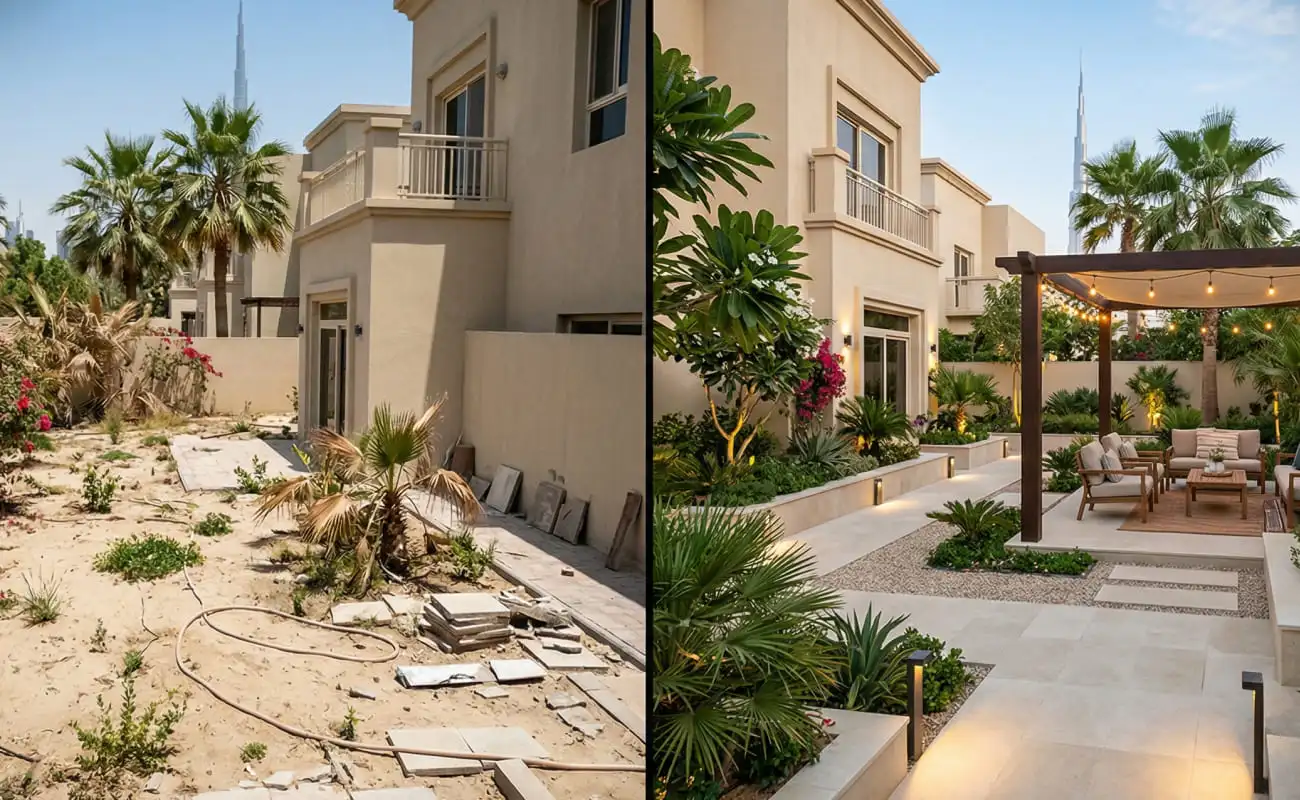
After enough projects across Dubai, you stop being surprised by what goes wrong. The same mistakes appear too consistently to be a coincidence. Worth naming them directly.
Tips by Property Type in Dubai
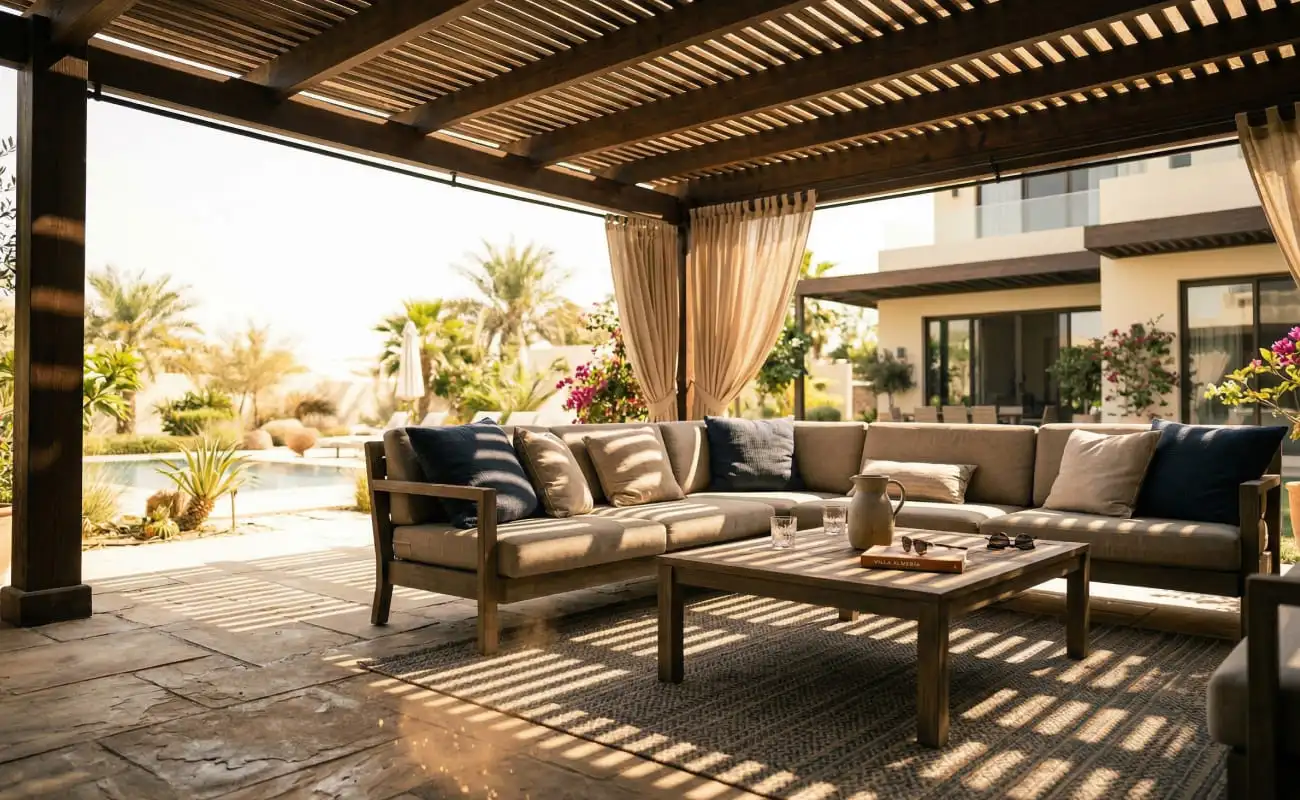
- Villa landscape designis fundamentally about zoning. The best villa garden landscaping Dubai projects don't treat the garden as one large undifferentiated space; they divide it into distinct zones, each with its own purpose and its own design logic.
2. Front entrance sets the tone, statement trees, clean paving, planting that frames the property confidently without overwhelming the facade. The pool surround is its own design challenge: layered planting for privacy and texture, quality decking that handles the heat, lighting that makes the space genuinely usable into the evening. The entertainment zone pergola, BBQ, outdoor dining lives and dies by shade and hardscape quality. Relaxation areas need softer planting, water features for ambient sound, and privacy screens that create genuine enclosure rather than the sense of being watched. Four zones. Four different briefs. One coherent garden.
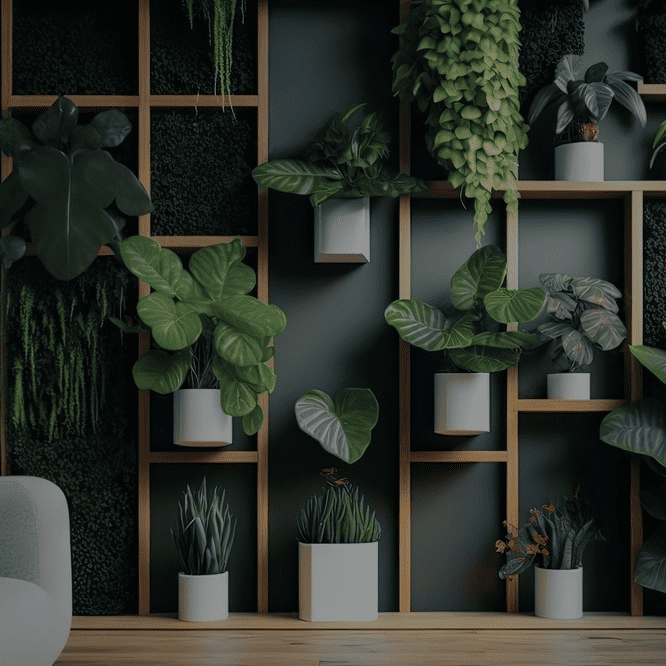
4. Apartments and terraces are a different problem entirely. The constraint is horizontal space, and the solution is almost always vertical. Living walls and vertical gardens deliver genuine planting density without floor footprint. Grouped containers in varying heights create layering on even a small balcony. Artificial grass on concrete needs no water, no mowing, and immediately transforms the feel of the surface underfoot. For residents across Business Bay, Dubai Marina, and JLT who want real greenery without high maintenance demands, this combination works consistently well.
What's Actually Working in Dubai Gardens Right Now
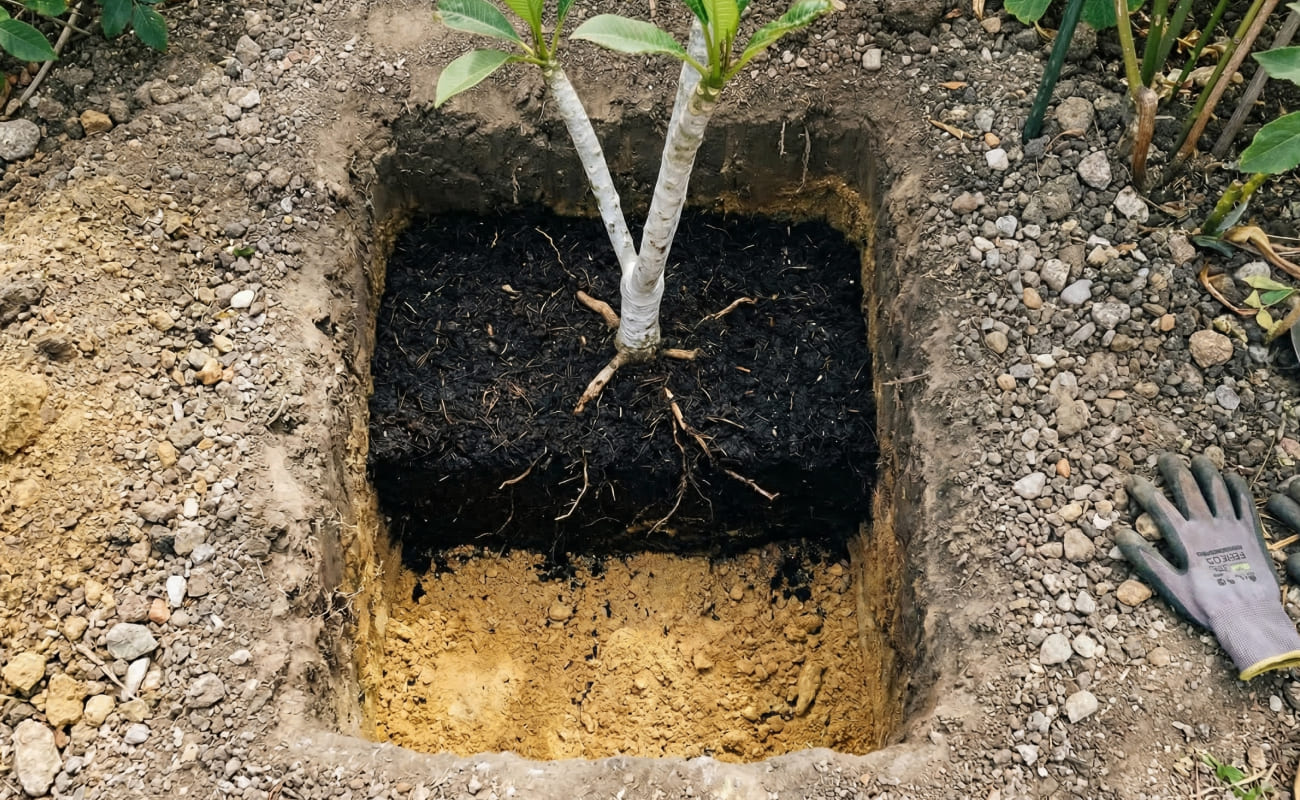
Modern gardens landscaping in 2025-2026 is being shaped by a genuine shift in how Dubai residents want to relate to their outdoor spaces. A few trends stand out clearly.
- Biophilic Design:Biophilic design has become the dominant direction in both residential and commercial outdoor landscape design. Living walls, vertical gardens, plant-integrated pergola and ceiling structures that dissolve the boundary between inside and outside. For anyone working with limited horizontal space apartment owners, townhouse residents, or anyone in a compact villa plot, going vertical isn't a compromise. It's often a better result than spreading planting thinly across the ground.
3. Wellness Gardens: Wellness gardens are now a genuine brief in Dubai's luxury villa market rather than an occasional request. Dedicated meditation zones, reflexology walking paths, aromatic herb gardens, spaces specifically designed for yoga or quiet sitting. The evidence connecting regular exposure to greenery with reduced stress and improved mental wellbeing is strong enough that serious homeowners are designing around it deliberately.
Choosing the Right Team in Dubai
There are plenty of companies offering landscape design services in Dubai. The gap in quality between the best and the rest is wider than most homeowners realise until they've experienced both.
- Check the Portfolio: Start with the portfolio. Not renders actual installed gardens in real Dubai communities. Al Barari, Jumeirah, Palm Jumeirah, Dubai Hills, Arabian Ranches, DAMAC Hills, Mirdif, JLT. If a company can't show you completed residential work across these communities, that tells you something important about their actual experience in this market.
Golden Seed covers all of this. As a landscape design company in the UAE with an established portfolio across Dubai's premium residential communities, the team handles everything from initial consultation through 2D design, full installation, and ongoing maintenance contracts. Landscape design services in Dubai built on this foundation produce gardens that look better over time because the climate, the community context, and the long term were accounted for from the very beginning.
Conclusion
A well-designed outdoor space in Dubai isn't a luxury add-on. When October comes and the evenings turn perfect, it's where life actually happens. Where the kids are outside. Where guests gather. Where you sit with a coffee before the heat of the day arrives. Getting it right has a daily return on investment that's hard to overstate once you've experienced it properly. Everything in this guide points toward the same habits. Plan before spending. Choose plants and materials built for this climate rather than borrowed from somewhere with completely different conditions. Get irrigation designed in from the start. Work with people who have actually delivered results in Dubai, not just people who say they can.
FAQs
Look for a company with real completed projects, not just renders, in Dubai's residential communities. Ask for site-based itemised quotes rather than estimates over the phone. Make sure their design process includes proper 2D visualisation before any installation begins. Golden Seed covers all of this and offers a free on-site consultation with no hidden costs and no obligation.
Biophilic design and vertical living walls are leading the way, particularly for compact spaces. Xeriscape and sustainable gardens aligned with UAE Net Zero 2050 goals are growing fast. Wellness-focused outdoor zones are becoming a standard brief in luxury villa projects. Smart irrigation is now expected rather than optional. And entertainment-first backyard landscape design with proper shade structures continues to define the best residential projects across the city.
There's genuinely no honest answer to this without seeing the actual space. Size, scope, materials, irrigation complexity, lighting, and community requirements all move the number significantly. Golden Seed provides a free consultation and a fully itemised quote so you know exactly what you're committing to before anything is agreed.
October through March is the ideal window. Cooler temperatures make installation more straightforward, plants establish better during this period, and you get to enjoy the finished space immediately through Dubai's best outdoor months. Golden Seed works year-round, though, and will give you an honest view on timing based on your specific project and community requirements.